(2-minute read)
At my clinic, a large proportion of patients come to see me for herniated and prolapsed disc treatments in Bristol.
A herniated or prolapsed disc can cause severe back pain and, if left untreated, can sometimes require surgery.
What is a herniated or prolapsed disc?
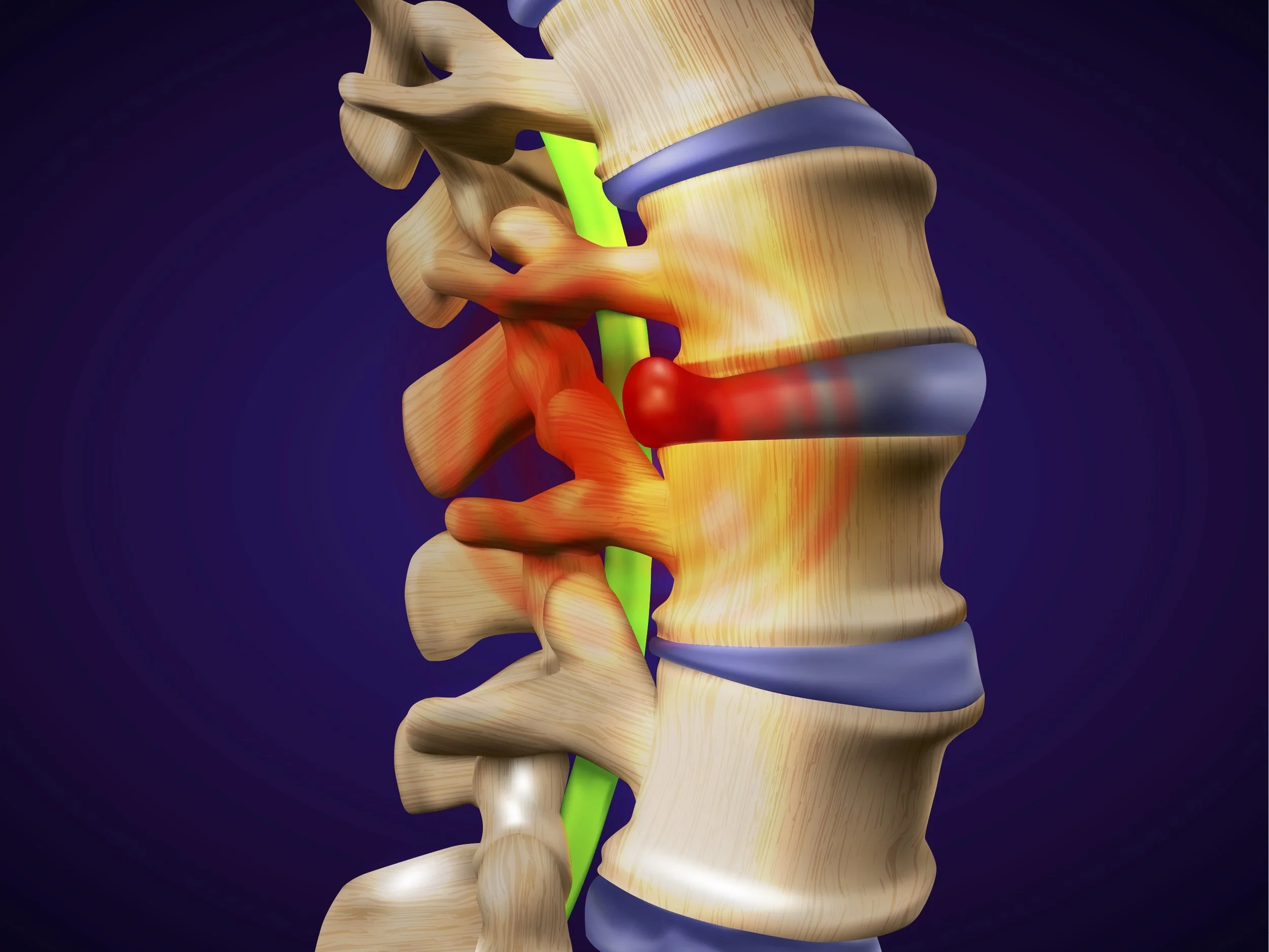
A herniated or prolapsed disc occurs when the soft inner gel (nucleosus) of a spinal disc pushes through a weakened or damaged outer layer (annulus). These commonly occur in the neck or low back.
If the bulging disc material then presses against a nearby nerve, it can cause ‘sciatic’ symptoms such as tingling, pain, numbness, and/or weakness that extends into an arm or leg (depending on the location of the disc bulge).
What causes a disc herniation or disc prolapse?
Significant factors include wear and tear and chronic compression.
Other significant factors can be poor lifting technique, overuse, and poor posture, particularly when sitting.
I treat patients in Bristol with herniated and prolapsed discs who are typically aged between 25 and 55.
One of the major causes of disc herniation and prolapse is not maintaining strong core muscles and good posture. These are vital to help protect the spine and discs over time.
To get free tips on how to improve your posture, please read this.
What are the best treatments for herniated or prolapsed discs?
Fortunately, most patients who visit me with a herniated or prolapsed disc improve without the need for surgery.
The most appropriate treatment for a herniated or prolapsed disc in Bristol depends on the severity of the disc bulge, the location of the affected disc, and how long the problem has been present.
For many patients visiting me at my clinic in Henleaze for the treatment of a herniated or prolapsed disc in Bristol, initial options often centre on manual osteopathic treatment.
Staying active with gentle, appropriate exercise is preferable to immobility or bed rest.
I also provide bespoke exercises designed to improve mobility and strengthen supporting muscles that aim to reduce irritation on affected nerves for patients.
I advise less sitting, more standing and walking, with careful daily hydration control.
Do I need surgery for a herniated or prolapsed disc?
Having treated herniated and prolapsed discs for over 30 years, the good news for patients in Bristol is that most cases do not require surgery.
Disc surgery may be required, and patients may be referred to a consultant when severe symptoms do not improve with non-surgical treatment or if the neurological symptoms indicate.
If significant nerve compression causes persistent symptoms, a referral for surgery may also be necessary.
Does a herniated or prolapsed disc cause sciatica?
Sciatica is the term given to pain located in the area of the leg supplied by the sciatic. Although disc injuries can cause sciatic symptoms, there are other conditions that can cause sciatica. Careful and accurate diagnosis is therefore key.
To find out more about sciatica and how I can treat it, please visit here.
Where can I book an appointment for herniated or prolapsed disc treatment in Bristol?
To book a consultation with me in Bristol for diagnosis of a herniated or prolapsed disc and treatment, please visit here.