(2-minute read)
I’m seeing more patients coming to see me in Henleaze BS6, for consultation and the treatment of Frozen Shoulder (Adhesive Capsulitis) in Bristol as the weather improves.
Typically, this presents as restriction and inflammation of the Gleno-Humeral (GH) joint (ball-socket joint) in the shoulder. Exact causation is still poorly understood, but it is almost certainly multifactorial.
Generally seen as an issue affecting middle-aged patients aged 40-60, Adhesive Capsulitis often impacts perimenopausal women and can last up to18 months.
What is Frozen Shoulder?
Frozen Shoulder is a condition that causes pain, stiffness and restricted movement in the shoulder joint.
It often develops gradually and affects daily activities such as dressing, reaching overhead and levels of comfortable sleep. It can be triggered by early arthritis or previous trauma to the shoulder area.
Patients sometimes confuse Frozen Shoulder with a Rotator Cuff Injury, as both are painful and present in the same area.
Sudden movement or trauma often causes a Rotator Cuff Injury, which can sometimes lead to a Frozen Shoulder treatment being required at my BS6 clinic.
What causes Adhesive Capsulitis?
No definitive causes for Adhesive Capsulitis are identified, but patients with diabetes, thyroid disorders, prolonged shoulder immobilisation and those recovering from surgery can be at a higher risk of developing Frozen Shoulder in Bristol.
Stress and hormonal factors almost certainly play an important part.
Frozen Shoulder symptoms
Spotting the early signs of a Frozen Shoulder condition can help in the effective treatment of the condition in Bristol and speed recovery. Typical symptoms include:
Persistent shoulder pain
Gradual and significant loss of shoulder movement
Difficulty reaching overhead
Worsening pain at night
What are the stages of Adhesive Capsulitis?
Adhesive Capsulitis issues in patients I treat in Bristol progress through three stages.
The stages are: the freezing stage (increased pain and immobility), frozen stage (severe restriction), and thawing stage (slow release of the joint), with most patients in Bristol seeing full recovery.
How is Frozen Shoulder treated in Bristol?
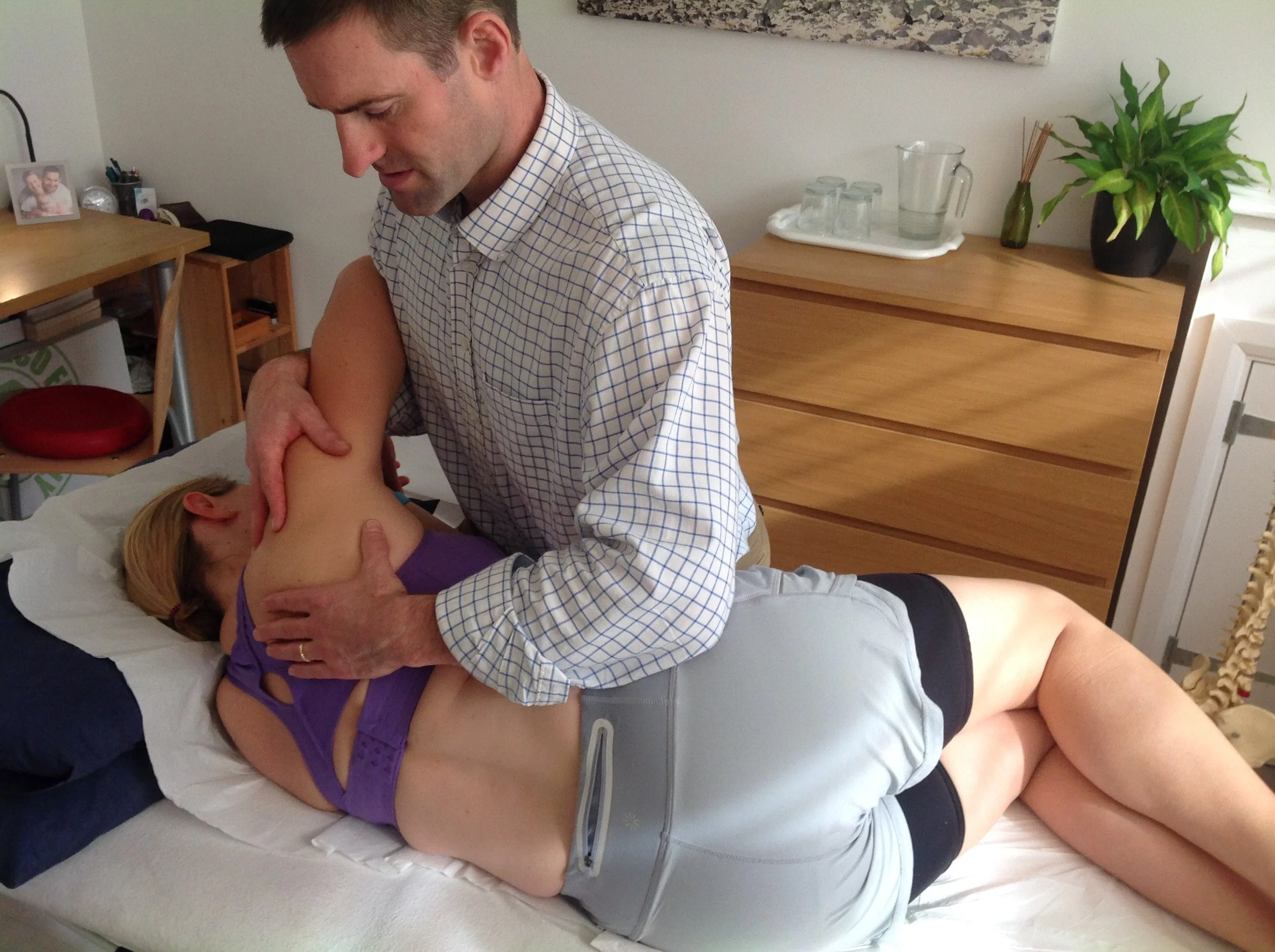
When it comes to the treatment of Frozen Shoulder (Adhesive Capsulitis) in Bristol, I recommend manual therapy for my patients.
If osteopathic treatment is not effective, I will refer a patient to a shoulder specialist who may advocate a ‘flush’ or hydro-dilation procedure in the joint.
What helps recovery time?
I advise patients recovering from Adhesive Capsulitis to keep the shoulder mobile and healthy.
Any water-based resistance activity is helpful. Swimming is a really good exercise with low impact.
Advanced treatments for Frozen Shoulder
If improvement is not seen within 1-2 months, other advanced treatments may be recommended for Frozen Shoulder issues with patients in Bristol.
These may include hydro-dilatation, manipulation under anaesthesia, or arthroscopic surgery to release the tightened shoulder capsule.
If you’re looking for the treatment of general shoulder injuries, I recommend that you read this.
Where can I get treatment for Frozen Shoulder (Adhesive Capsulitis) in Bristol?
To book a consultation with me for the treatment of Frozen Shoulder (Adhesive Capsulitis) in Bristol, please visit here.