(3-minute read)
Spring is a time of year when I start to see patients asking about treatment for Ilio-Tibial Band Syndrome (ITBS) in Bristol, so I thought it would be helpful to write a blog on it.
What is Ilio-Tibial Band Syndrome?
Ilio-Tibial Band Syndrome (ITBS) is a common cause of outer (lateral) knee and thigh pain, with patients visiting me in Bristol at my Henleaze osteopathic clinic.
ITBS usually affects runners, cyclists and patients who have over-strained the area. It is often caused by overuse and poor training techniques, leading to excess tension, friction and pain.
Where is the Ilio-Tibial Band?
The Ilio-Tibial (IT) Band is a thick strip of connective tissue running from the outer (lateral) hip to the knee. The IT Band sits on the outer side of the leg and stabilises the hip and knee.
Overuse of the IT Band can lead to it becoming over-tight, causing tension, inflammation and pain.
What are the causes of ITBS?
ITBS can be caused by existing biomechanical issues in the patient. Typically, it is caused by repetitive motion. This is why it can impact runners and cyclists.
Contributing factors in the causation of ITBS in patients I treat in BS6 can include poor core stability, weak hip muscles, poor running form, rapid increases in training activities, and inadequate recovery.
What are the symptoms of ITBS?
Tightening in the IT Band and surrounding muscles often increases strain on the outer side of the knee joint. Micro strain of the knee tendon is common, as well as pain around the kneecap.
Patients coming to me for treatment of Ilio-Tibial Band Syndrome in Bristol often complain of niggles and initial pain when running.
I also often find ITBS can affect patients who undertake a new activity or rapidly increase an exercise, such as using running equipment and treadmills in gyms without building slowly.
What is the best treatment for ITBS?
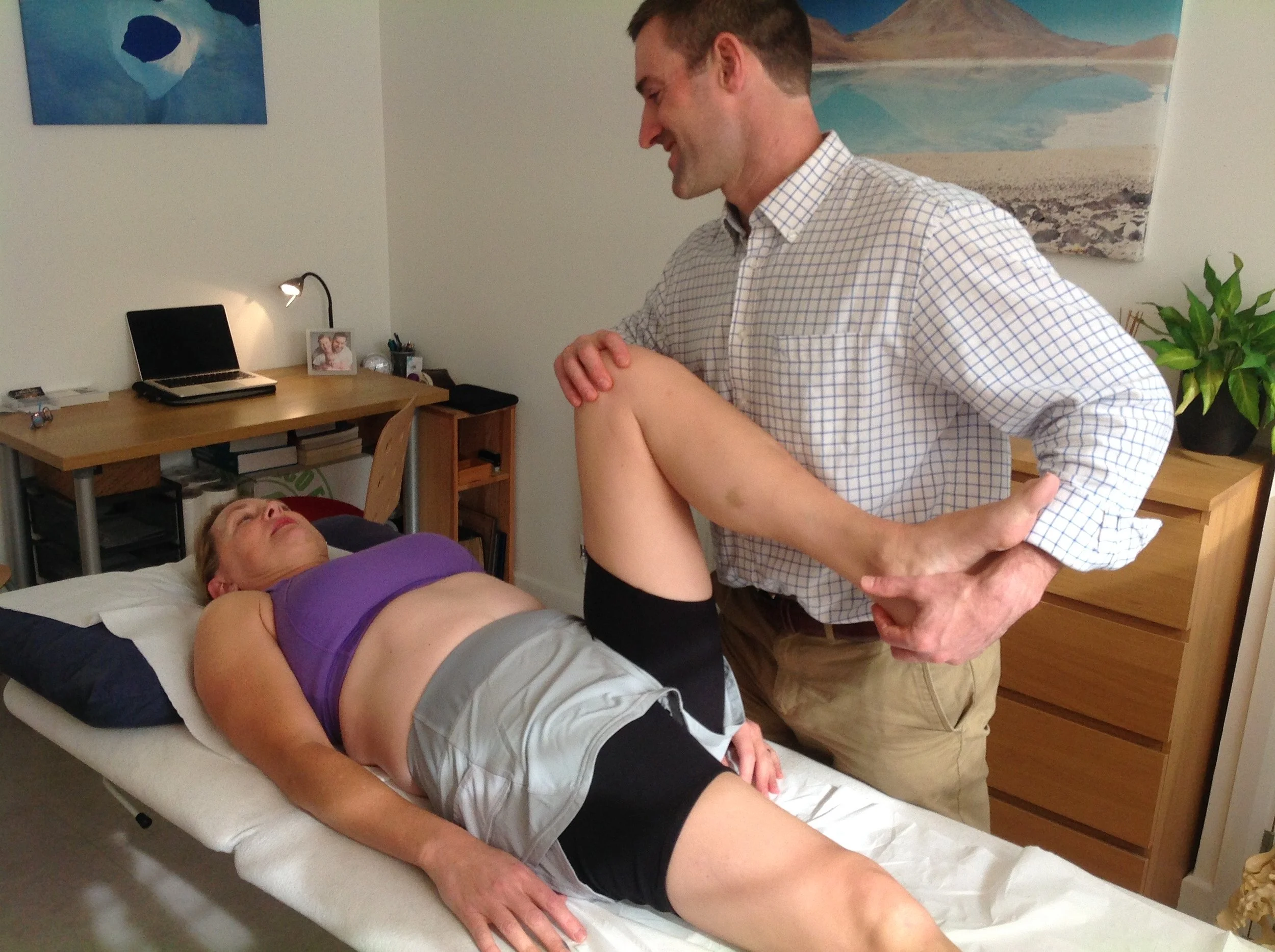
Patients with ITBS at my Bristol osteopathic clinic are offered bespoke treatments for ITBS, so there isn't one particular favourite or recommended course of action for this issue.
The first step is to carry out a thorough consultation and identify the issue. Treatment can include a variety of areas such as the knee, hip, calves, quads and back.
Rehabilitation is critical as part of the treatment plan for an ITBS injury for every patient.
As an experienced osteopath in Henleaze, some of the best treatment for ITBS with my patients includes knee stabilisation and a focus on restrengthening and re-stabilising the area.
I provide ITBS patients with bespoke rehab exercises within pain-free ranges.
Can Ilio-Tibial Band Syndrome be prevented?
Better core strength and increased flexibility are effective ways to prevent ITBS injuries.
I also recommend periodised programmes for new runners.
It is also worth getting a Maintenance Osteopathic Treatment (MOT) with me to identify any predisposing issues in muscles or ligaments.
Where can I get treatment for Ilio-Tibial Band Syndrome in Bristol?
To book a consultation with me for treatment of ilio-Tibial Band Syndrome (ITBS) in Bristol, please visit here.